Bedding • Fit & care
Finding the Right Sheet Fit for a Layered Bed
A topper can soften a mattress, add support, or alter the feel of a familiar bed. It also changes the dimensions that matter when you pull on a fitted sheet. Measuring the full sleep surface—and understanding how fabric behaves—can help prevent tight corners, creeping elastic, and sheets that come loose in the night.
Published November 1, 2026
A bed is not always a single mattress beneath a sheet. Many sleep surfaces are layered: a mattress may sit under a protector, a comfort pad, or a topper, with a fitted sheet stretched over the whole arrangement. Each layer adds a little height. Taken together, those inches can make the difference between a neat, secure fit and fabric that strains at the corners.
The issue often appears gradually. A topper is added to soften a firm mattress, or a natural latex layer is introduced for a more responsive feel. The old sheet still covers the bed, but its elastic rides high, the corners lift, or the fabric pulls taut across the top. These are not necessarily signs of a poor-quality sheet. The bed’s total height may simply have outgrown its pocket depth.
Choosing the right sheet fit begins with a careful measurement of the assembled bed. It also means looking beyond a label such as “deep pocket.” Sheet fabric, weave, elastic placement, mattress shape, and laundering all influence how well a fitted sheet stays put. A few practical checks can make a layered bed more comfortable and easier to maintain.
Why a topper changes sheet fit
A fitted sheet is designed to wrap around the top and sides of a mattress. Its pocket depth describes how far the fabric can descend from the sleeping surface toward the underside. When a topper or pad is added, the sheet has more vertical distance to cover. If the pocket is too shallow, its elastic may not reach far enough beneath the mattress to hold securely.
Even a relatively thin layer affects the fit. A two-inch topper adds two inches to the bed’s height before accounting for any loft, quilting, or protector beneath it. A fluffy comfort layer can compress under a sleeper, but its uncompressed height still matters when the sheet is being fitted. Likewise, a quilted protector or a wool pad can contribute thickness of its own.
The material of the topper does not change the basic measuring method. Latex, memory foam, wool, and fiber-filled layers all add height, though they differ in resilience and how much they compress. Natural latex, for example, is typically responsive rather than easily flattened into a thin layer. Measure the actual setup, rather than relying on the name or advertised thickness of any one component.
Measure the assembled sleep surface
For a useful sheet-depth estimate, build the bed in the order you normally use it. Place the mattress on its foundation, add any protector and comfort layers, and let the materials settle into their usual positions. Then measure from the top of the finished sleep surface down the side to the bottom edge of the mattress. This is the vertical distance a fitted sheet must cover.
Measure more than one place. Quilting, seams, pillow tops, and uneven compression can make one side slightly taller than another. Check at a corner and along a side, taking care not to push down on a soft topper while measuring. If the bed has a pronounced pillow top or a thick pad, use the greatest practical measurement as your reference.
It is helpful to distinguish mattress thickness from total bed height. The mattress manufacturer’s listed depth usually describes the mattress alone; it does not include an added topper or pad. For fitted-sheet shopping, the relevant number is the combined height of the mattress and all layers beneath the sheet.
- Assemble the bed first. Include every layer that will sit beneath the fitted sheet.
- Measure vertically. Start at the top sleeping surface and measure down the side to the mattress’s lower edge.
- Check several points. Compare a corner with the side and note the largest measurement.
- Record the result. Keep the total depth with the bed’s size so you can compare it with sheet specifications later.
Some manufacturers state a maximum mattress depth, while others describe pocket depth. These terms are related but not always presented in exactly the same way. Read the product’s sizing notes carefully and check whether the stated measurement refers to the mattress alone or to the full layered surface. When in doubt, ask the maker how its measurement is defined.
Allow room for a secure, comfortable fit
A sheet that matches the bed’s exact measured depth may still feel tight. The fabric needs enough reach to wrap under the mattress, and the elastic needs room to grip. A modest allowance beyond the measured height can make fitting easier, especially when the mattress has rounded corners or the layers shift slightly during use. The right amount varies by construction, so use the maker’s stated maximum depth as a guide rather than assuming every “deep-pocket” sheet fits every thick bed.
Too much pocket depth can also be inconvenient. Excess fabric may bunch beneath the mattress, while loose corners can work their way free. A very generous pocket is not automatically a better choice if the sheet has weak elastic or a cut designed for a different mattress shape. The goal is not maximum depth; it is a secure fit with enough ease to avoid overstretching.
Check the elastic arrangement as well as the pocket measurement. Some fitted sheets use elastic around the full perimeter; others place it only at the corners. Full-perimeter elastic may help hold the sheet evenly, while corner elastic can be easier to pull on and remove. Neither design guarantees a perfect fit on its own. Fabric stretch, corner shape, and the total depth all play a part.
How fabric and weave affect the fit
Sheets do not behave identically. Weave and fiber influence the surface feel, drape, stretch, and tendency to wrinkle. These qualities can change how a sheet sits over a layered bed, even when two sets have similar listed dimensions.
Cotton percale
Percale is a plain weave commonly associated with a crisp, matte hand. It tends to feel cool and structured rather than silky or drapey. That crispness can make a percale sheet feel snug over a thick or firm sleep surface, particularly if its dimensions leave little spare fabric. Percale is not inherently unsuitable for a layered bed, but accurate measurements and the sheet’s maximum-depth specification matter.
Cotton sateen
Sateen uses a different weave that produces a smoother surface and often a softer drape. It may feel more fluid over a topper than crisp percale, but softness should not be mistaken for extra stretch. A woven sateen sheet usually has limited give compared with a knit. Fit still depends on its cut, dimensions, and elastic construction.
Jersey knit
Jersey is knitted rather than woven, giving it more natural flexibility. That give can help the sheet accommodate small differences in height or contour and may make it easier to pull over rounded corners. But stretch is not a substitute for adequate pocket depth. If jersey is pulled too far, it can become tight, distort the surface, or gradually slip free.
Fabric labels do not tell the whole story. Cotton fiber, finishing, thread construction, and laundering can influence a sheet’s hand and dimensions. If a secure fit is the priority, compare the actual depth specification and construction details first; choose the weave and feel that suit your comfort preferences second.
Check the whole bedding stack
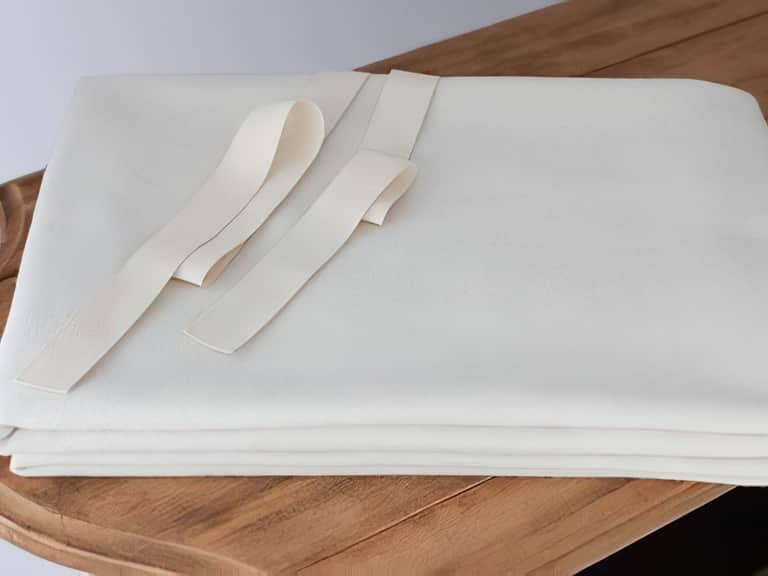
A layered bed may include more than a mattress and topper. A protector, quilted mattress pad, or fitted cover can add thickness between the mattress and the sheet. For example, a wool mattress pad with corner ties can sit beneath a fitted sheet and contribute to the overall profile. The Savvy Rest Wool Mattress Pad is one such layer; when any pad is added, its place in the stack should be included in the fit check.
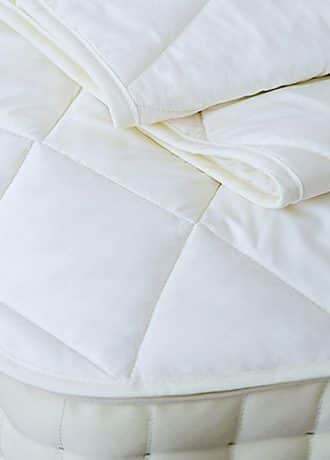
Order matters. Some protectors are designed to fit directly over the mattress, while others may be used over a topper. Follow the care and fit instructions for each component, and decide which layers the fitted sheet is intended to cover. If the topper has its own cover, that cover may remain visible beneath the sheet or be enclosed with the mattress, depending on the product design.
Try not to force a fitted sheet over a stack that is beyond its stated capacity. Excessive tension can strain seams and elastic, and it may compress a comfort layer unevenly. If the corners are difficult to pull down or the sheet repeatedly springs off, reassess the total depth before assuming the material simply needs more stretching.
Care can affect dimensions over time
New sheets may change slightly after laundering, and care practices influence how well they retain their shape. Always follow the sheet maker’s instructions for water temperature, drying, and ironing. High heat can contribute to shrinkage in some fabrics, while over-drying may leave fibers feeling harsher or more creased. A sheet that was only just deep enough when new may become harder to fit if it shrinks.
Wash sheets before first use if the maker recommends it, and avoid assuming that stretching a tight sheet by hand will permanently increase its size. If the sheet becomes difficult to put on after washing, review the care label and compare its current fit with the bed’s total measured depth. Rotating between sets can also reduce repeated wear on the same elastic and seams.
When making the bed, smooth the top gently rather than pulling one corner as far as it will go. Uneven tension can make another corner lift. If the mattress is heavy, raising each side slightly may make it easier to secure the sheet without overstretching the elastic.
A practical fit test
Before relying on a new sheet for everyday use, test it on the complete bed. Pull each corner into place and check that the elastic sits beneath the mattress edge rather than barely clinging to the side. Run a hand along the perimeter to find loose pockets of fabric or areas that are under strain. The top should lie comfortably without pulling the topper into ridges or compressing it unevenly.
After sleeping on the bed, check whether the sheet has shifted. A corner that lifts repeatedly may indicate that the pocket is too shallow, the elastic is worn, or the overall shape does not match the mattress. A sheet that stays in place but feels drum-tight may also be a poor fit, even if it has not come loose.
Quick checklist for choosing sheets
- Measure the mattress, topper, protector, and pad together.
- Compare the total depth with the sheet’s stated pocket or maximum mattress depth.
- Look for information about elastic placement and mattress shape compatibility.
- Choose percale, sateen, or jersey according to feel and flexibility—not as a substitute for correct sizing.
- Follow the care label to help preserve the sheet’s original dimensions and elastic.
- Test the fit on the fully assembled bed, then check whether it stays secure after use.
Common questions about sheet pocket depth
How much deeper should a fitted sheet be than my mattress?
Start with the measured height of the complete sleep surface, then compare it with the manufacturer’s stated maximum depth. A little extra room is often useful for tucking the sheet securely, but there is no single allowance that suits every design. Elastic, corner shape, fabric, and the way the maker defines pocket depth all matter.
Can regular sheets fit a mattress with a topper?
Sometimes. If the mattress and topper together remain within the sheet’s specified depth range, the sheet may still fit. Measure rather than relying on the words “regular” or “deep pocket,” which can vary between brands. A topper that adds only a small amount of height can still affect a close-fitting sheet.
Does a natural latex topper need special sheets?
Usually, the key requirement is adequate depth, not a special sheet material. Include the latex layer in the total measurement and choose a fitted sheet that accommodates the complete stack. Fabric preference is personal: woven cotton offers a different feel from a stretchy jersey knit, but either may work if the size and construction suit the bed.
Why does my fitted sheet keep coming off?
Possible causes include insufficient pocket depth, worn elastic, a mattress or topper combination larger than the sheet’s intended range, or a mismatch between the sheet’s shape and the mattress corners. Re-measure the assembled bed and inspect the elastic. If the fit is tight even when the sheet is new, a deeper or differently constructed sheet may be needed.
The small measurement that changes the night
Layering gives sleepers room to adjust the feel of a bed, but each addition changes its dimensions. A reliable sheet fit is less a matter of guesswork than of observing the whole structure: mattress, topper, protector, pad, and the fabric that must hold them together. Measure the assembled surface, compare the result with clear pocket-depth guidance, and consider how the sheet’s weave and elastic respond to the bed.
When the proportions are right, the sheet can lie smooth without being stretched to its limits. The layers beneath it remain in place, the corners stay secure, and the bed is easier to make each morning. That quiet fit is the product of a simple habit: measure the bed as it is actually used, not as it once was.