Dunlop vs. Talalay: Material Differences in Natural Latex Mattresses and Pads
An in-depth exploration of how two ancient yet evolving latex manufacturing methods—Dunlop and Talalay—shape the feel, durability, and temperature dynamics of latex mattress pads. This article reads the grain of material science as carefully as a field guide reads a landscape, helping readers discern which process aligns with their sleep preferences, care routines, and long-term comfort goals.
Latex has long stood as a benchmark for responsive support in bedding. But beneath the soft touch and buoyant lift lies a manufacturing choice that can subtly alter how a pad performs across seasons, with implications for pressure relief, airflow, and longevity. Dunlop and Talalay latex are not mere brands or marketing terms; they are distinct production philosophies that yield different densities, resilience, and microclimates within the sleeping surface. For consumers seeking latex mattress pads that balance contouring with durability, understanding these differences is essential to an informed purchase.
Origins of the Two Methods: A Brief Historical Context
Latex, derived from the sap of rubber trees, has been molded into bedding products for decades. The Dunlop method traces its roots to a simpler, denser pour-and-set process. It typically results in a single, denser base with a lighter upper layer, delivering a robust core with a potential for firmer initial feel. In contrast, the Talalay method refines both density and consistency through a multi-stage process: vacuum compression to create a uniform cell structure, precise partial curing, and flash-freezing steps that yield a more uniform, typically more consistent feel across the entire depth. The result is a cushion with a more predictable bounce and more uniform response to pressure across the surface. These distinctions matter when latex is used in toppers and pads, where the balance of support, contour, and temperature management comes into direct contact with the sleeper's body.
How Each Process Shapes Feel and Comfort in Latex Mattress Pads
Feel and comfort in a latex mattress pad are a product of density, cell structure, and the way air moves through the material. Dunlop latex often presents a more immediately supportive feel with a denser base. The initial strike can feel firmer, particularly at the core, which may translate into firmer pressure relief under heavier parts of the body. However, because Dunlop can be produced with a more varied layering, it can deliver a sturdy yet breathable experience when paired with a lighter top layer. The air channels and the density gradient within a Dunlop-loaded pad influence how heat is carried away from the skin, which can be beneficial for sleepers who prefer a cooler surface or a more secure, grounded sensation.
Talalay latex, conversely, is celebrated for its overall consistency and lighter, more buoyant bounce. The uniform microstructure tends to produce a more evenly distributed feel across the entire surface, reducing hotspots and yielding a softer initial contour with a springy response. For side sleepers who seek a cushion that relieves pressure on shoulders and hips, Talalay can feel more forgiving at the surface while maintaining support. In pads designed for protection against moisture or spills, Talalay’s open-cell architecture often enhances airflow, contributing to an airy sleeping climate that aligns with warmer room conditions or high-sweat individuals.
Practical Buying Tips: Reading Specs and Understanding Certifications
When evaluating a latex mattress pad, the product specifications are the compass by which you navigate. Look for explicit labeling of the latex type and process—Dunlop or Talalay—along with the density rating, typically expressed in pounds per cubic foot (PCF) or kilograms per cubic meter (kg/m3). A higher density often indicates longer-lasting support and reduced compression under heavier loads, but the perceived feel may also depend on the presence of a top cover, the thickness of the pad, and whether the latex is blended with other materials.
Certifications and safety marks offer additional assurance. Independent certifications that verify content claims, toxin absence, and environmental stewardship are valuable in this domain. While Dunlop and Talalay refer to manufacturing methods rather than a certification, materials sourced for natural latex bedding may be accompanied by certifications such as OEKO-TEX or other region-specific sustainability labels. For latex forest products, traceability statements and third-party testing are increasingly common as consumer demand for transparency grows.
In a pad, you might also encounter protective layers, waterproof barriers, or wool or cotton covers, which influence not only comfort but breathability and moisture handling. Consider how these ancillary layers interact with the latex core to shape the overall climate of the sleep surface. A well-chosen pad harmonizes the natural elasticity of latex with the cover’s fabric properties, ensuring comfort remains consistent through the seasons.
Care and Longevity: How to Maintain Loft and Performance
Maintenance is a quiet but critical factor in keeping a latex mattress pad performing as intended. Dunlop and Talalay latex, when properly cared for, respond well to routine washing and appropriate drying, though care instructions may vary slightly depending on the complete construction of the pad. Most latex mattress pads designed for daily use can be machine washed on a gentle cycle with cold water and mild detergent, then tumble dried on low or line dried. Avoid high-heat drying, which can affect loose fibers or with outer fabric components.
Regular rotation of the pad can help equalize wear across the surface, particularly for pads with layered construction. If your pad features a water barrier or quilting channels, ensure these components remain intact to preserve both the barrier properties and the loft. For sleepers with specific sensitivities, consider natural-fiber covers that resist dust mites and offer breathability, as this can influence indoor air quality and perceived comfort over time.
Impact on Temperature Regulation and Sleep Climate
Temperature regulation is often a decisive factor in latex selection. Talalay’s uniform cell structure can contribute to a more evenly distributed microclimate across the sleeping surface, supporting cooler sleep for some individuals, particularly when paired with breathable top fabrics like cotton sateen. Dunlop’s potentially denser core may retain more body heat in the core region, yet layering with a breathable cover or lighter upper section can mitigate this effect. The choice between Dunlop and Talalay in a mattress pad thus becomes a balance between desired contour, the topmost contact experience, and the intrinsic airflow within the latex layer itself.
For hot sleepers, the padding system that includes a breathable cover, an open-core design, or a breathable liner can make a meaningful difference. Conversely, for someone who values a firmer, more enveloping feel underneath the upper body, a Dunlop-heavy configuration might deliver the sense of stability they seek while maintaining adequate airflow if designed with appropriate pore structure and top-layer selection.
A Close Look at a Real-World Example: The Arcadia Waterproof Mattress Pad
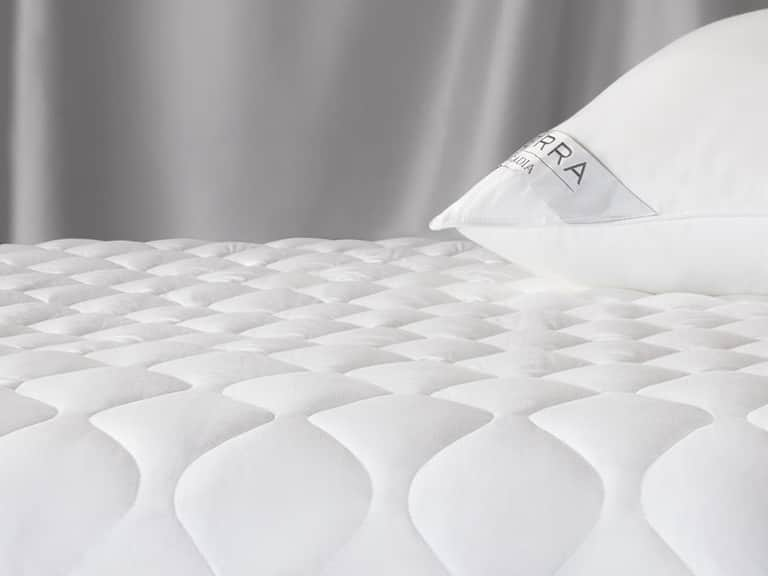
Among contemporary latex-embedded pads, the Arcadia Waterproof Mattress Pad represents a practical synthesis of latex comfort with protective functionality. Its core employs a down-alternative fill that blends softness with resilience, while the top employs a smooth cotton sateen surface. A waterproof bottom layer guards against spills and moisture, a feature that broadens its appeal to households with children or high-activity sleepers. Although Arcadia is not a pure latex core, readers can glean how manufacturers combine latex-derived concepts with other materials to balance protection, comfort, and climate control in a single product.
When assessing a product like Arcadia in the context of Dunlop vs. Talalay, the essential question is: what role does the latex component play? If the pad’s latex content is part of a layered approach where the primary feel derives from a down-alternative fill or cotton shell, the direct comparison to pure latex cores may be limited. Nevertheless, the influence of the latex processing method on the fill distribution, seam integrity, and the long-term loft remains instructive for gauing expected performance over time.
Glossary of Key Terms for Latex Bedding
- Dunlop: A latex manufacturing method producing a denser base with potential for a firmer overall feel and robust support.
- Talalay: A latex manufacturing method producing a more uniform cell structure and a consistent, often lighter, feel with even contouring.
- Density: A measure of latex weight per unit volume, often indicating durability and support intensity.
- Open-cell architecture: A porous structure that enhances air movement and cooling properties.
- GOLS / GOTS: Certifications indicating organic and natural content, relevant to components of padding covers and construction.
- Contour vs. bounce: The balance between a mattress pad conforming to pressure and offering a responsive lift.
FAQs: Common Questions About Dunlop vs. Talalay in Latex Pads
Q: Which latex process is better for hot sleepers? A: Talalay’s uniform structure can promote consistent airflow, which may help with cooling, especially when combined with breathable cover fabrics. However, the overall climate depends on the entire pad construction, including the top cover and any moisture-wicking layers.
Q: Do Dunlop or Talalay latex cores wear out faster? A: Longevity is influenced by density and build quality. Both processes can produce durable cores, but higher-density Dunlop cores may resist compression in the long term. Regular care and proper rotation extend loft and performance for any latex pad.
Q: How can I tell which process a product uses? A: Look for specifications that name Dunlop or Talalay, density values, and often a product narrative that explains the manufacturing method. Some manufacturers explicitly label the latex method on packaging or product pages.
Conclusion: Making an Informed Choice for Sleep Wellness
The choice between Dunlop and Talalay in latex mattress pads is not merely a technical footnote; it is a decision about how you want your body to interact with the bed each night. If you crave a firmer, more anchored feel with potential longevity in high-use scenarios, a Dunlop-influenced pad, layered with appropriate top fabrics, might align with your preferences. If you seek a more uniform, buoyant surface that emphasizes contouring and even thermal regulation, a Talalay-influenced pad could better suit your sleep profile. In the end, the most important criterion remains comfort—how the pad aligns with your posture, weight distribution, and nightly rhythms.
For readers of latexmattresspad.com, the educational path is clear: understand the material, learned through careful reading of product specs and independent reviews; assess how your sleep habits and room environment interact with the pad; and choose a configuration that supports restful nights with minimal compromise between comfort, durability, and care. The science of latex, whether Dunlop or Talalay, remains a timeless thread in the fabric of sleep.
If you’d like, I can tailor a detailed 12-week content calendar focused on Direction A — Educational resource on latex mattress pads — with article topics, titles, and suggested word counts to deepen coverage of Dunlop vs. Talalay and related latex bedding topics.
Related Product Spotlight
Arcadia Waterproof Mattress Pad — a practical example of layering considerations in a latex-adjacent product context, featuring a breathable top and a waterproof bottom for protection and daily use. While it blends down-alternative fill with a latex-inspired cushion profile, its design demonstrates how modern pads combine latex-derived comfort with protective technology to meet real-world needs.
Note: This article discusses material processes and practical considerations without endorsing specific commercial claims beyond publicly available product information. Readers seeking definitive technical specifications should consult manufacturer documentation and independent testing when available.
Published by latexmattresspad.com • Date: 2026-09-30